Keep one row per physical gasket candidate. Record the transmission code, every part number exactly as supplied, the source of each number, a product photo or drawing reference, known construction and current verification status. Treat cross-references as search aids until the gasket geometry, material and application are confirmed.
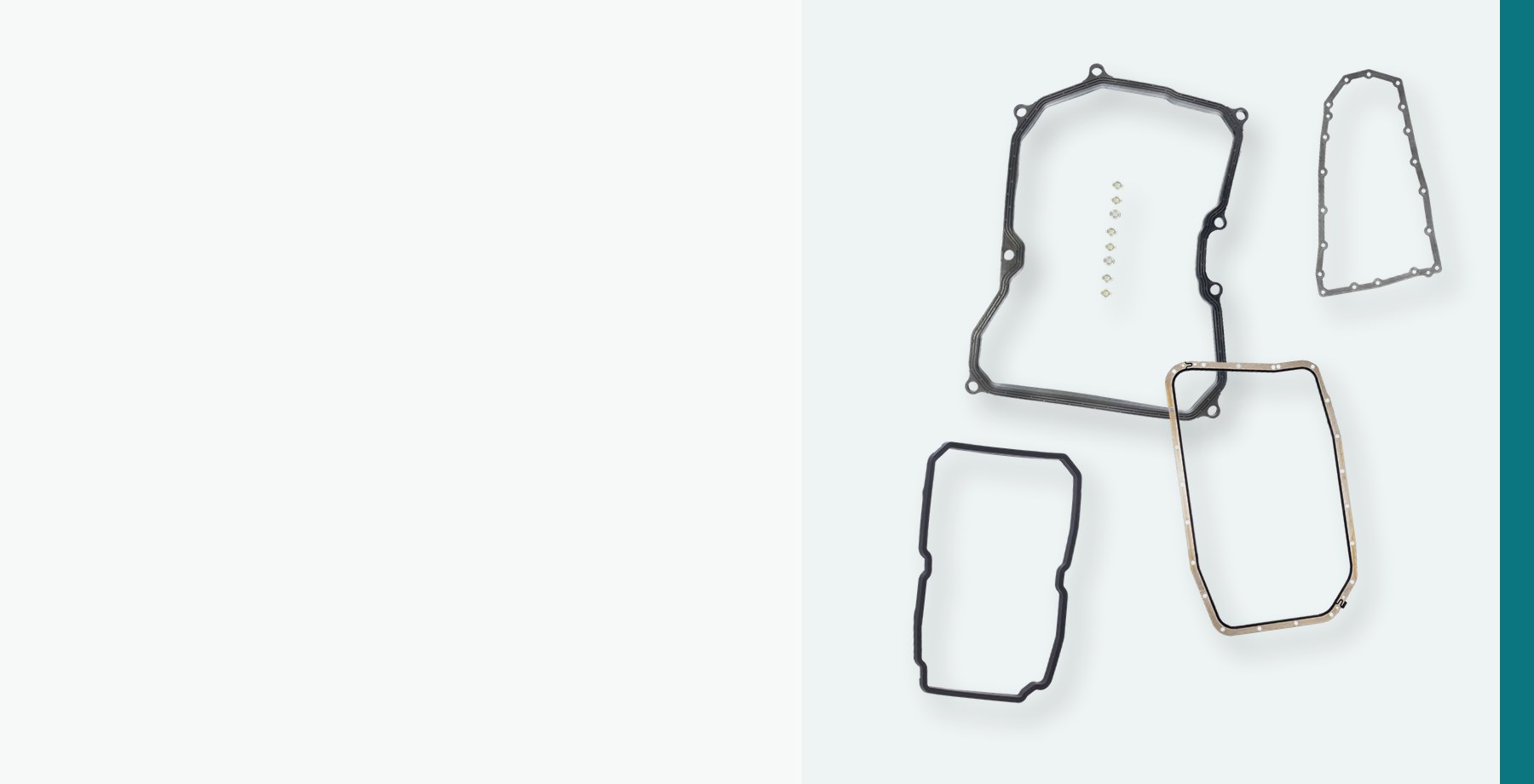
Why one loose number creates avoidable RFQ errors
A buyer may receive a transmission code from a workshop, an OE-style number from an invoice, an aftermarket article from a catalog and an internal stock code from a previous supplier. Those values can describe the same candidate, different constructions or unrelated parts. Combining them in one text cell without source labels makes later review harder.
A cross-reference list should preserve what each source actually says. It is a working comparison file, not proof that every listed number is interchangeable. Final fitment still depends on the transmission identity, gasket geometry, construction and application.
Use one row per physical gasket candidate
Do not create one row for every spelling variation. Start with the physical gasket or documented catalog record, then attach its known identifiers in separate fields. This makes duplicate detection possible while preserving the original evidence.
| Field | What to record | Why it matters |
|---|---|---|
| Transmission reference | Exact code and the source where it was found | Narrows the transmission family |
| Article or OE-style number | Original punctuation, spacing and leading zeros | Preserves a searchable source value |
| Identifier type | OE, aftermarket, supplier, factory or internal | Prevents different number systems from being merged blindly |
| Source | Catalog page, invoice, package label, sample marking or drawing | Lets another reviewer trace the claim |
| Physical evidence | Photo set, drawing number, sample ID and key dimensions | Connects the data row to a real gasket |
| Construction | Observed or requested material and structural features | Separates similar outlines with different product definitions |
| Review status | Documented pair, candidate match, unresolved or approved sample | Stops an uncertain row from becoming an order line |
Separate identifier types instead of treating every number as an OE number
Label each value according to its source. An aftermarket catalog article, a supplier code and an OE-style reference can all be useful search keys, but they do not have the same meaning. If the identifier type is unknown, mark it unknown until the source can be checked.
Keep a separate notes field for aliases and formatting variants. This allows a buyer to search common variations without rewriting the original value or presenting an unverified alias as an official replacement number.
Use a clear working status for every row
A simple internal status helps purchasing, engineering and sales see what can move forward:
- Documented pair: the transmission code and article number appear together in a traceable catalog or product source.
- Candidate match: the record is plausible, but physical geometry or construction has not been checked.
- Unresolved: sources conflict, a key field is blank or the number cannot be traced.
- Approved sample: the buyer has completed its required sample or technical approval process.
These are suggested workflow labels, not a formal industry certification. A buyer can adapt them to its own quality and approval system.
Catalog examples: keep the transmission code and article number together
The following Jingyi catalog records show how a transmission reference and article number can be stored as a pair. Open the page to compare the recorded fields and product image, then confirm the required gasket before ordering.
| Transmission reference | Article number | Catalog record |
|---|---|---|
| 3L80 / TH400 | 3893F | Open 3L80 / 3893F |
| 4EAT-F / F4AEL | 13945F | Open 4EAT-F / 13945F |
| 5EAT-SUBARU / JR507E | B11390 | Open 5EAT-SUBARU / B11390 |
| 722.4 / W4A020 | 13842R | Open 722.4 / 13842R |
| V4A11 / V4A12 | MR336174 | Open V4A11 / MR336174 |
| ZF5HP18 | 13629FR | Open ZF5HP18 / 13629FR |
| ZF5HP19 (BMW) | 13629PF | Open ZF5HP19 / 13629PF |
| JF006E / RE0F06A | 33300E | Open JF006E / 33300E |
| CVT-P210 / CVT-K110 | 35168-63010 | Open CVT-P210 / 35168-63010 |
These examples are identification starting points. They do not authorize vehicle fitment or make every external alias interchangeable with the Jingyi article number.
Normalize for search without deleting the source value
A purchasing file may need a normalized search column that removes spaces, punctuation or letter case. Keep that field separate. For example, a search key can help find both a hyphenated and non-hyphenated entry, while the original source field still shows exactly what appeared on the package, drawing or catalog.
Leading zeros deserve special care. They may be meaningful in an article number, and spreadsheet software can silently remove them when a column is treated as numeric. Store part numbers as text.
When the buyer is checking one reference rather than maintaining a multi-item file, use the transmission pan gasket part-number lookup workflow to preserve the source number, pair it with a transmission code and stop when records conflict.
Find duplicates and conflicts before asking for price
Sort or filter the list by transmission code, normalized number and sample ID. Review rows that share a number but point to different images, materials or transmissions. Also review rows that share a gasket image but carry different unexplained numbers.
Do not resolve a conflict by selecting the most common marketplace title. Keep both source records and ask for stronger evidence. A clear disagreement is safer than a false merge that reaches a purchase order.
Move to sample or drawing review when the list cannot settle the match
Request a sample, drawing or measured photo set when the transmission reference is missing, source fields conflict, similar candidates remain, the old gasket is distorted, or the buyer needs a different construction. The custom gasket sample and drawing checklist explains what to include.
For physical matching, use the transmission oil pan gasket identification guide to record the outline, bolt-hole positions, cutouts, dimensions and construction.
Prepare the cross-reference handoff for an RFQ
- Send the current cross-reference file rather than pasting an unlabelled number list into an email.
- Mark which rows need a catalog quote and which rows still need matching support.
- Attach the photo, drawing or sample ID referenced by each uncertain row.
- Add required material direction, trial quantity, expected repeat demand and packaging.
- Include destination country and the person responsible for sample approval.
Once the list is clean, use the wholesale quote checklist to add MOQ, sample timing, packaging and lead-time questions.
Frequently asked questions
Is a gasket cross-reference number proof of fitment?
No. It helps locate a candidate record. Confirm the transmission code, physical geometry, construction and application before ordering.
Can a buyer identify a transmission oil pan gasket with one part number?
Not reliably in every case. Record the number exactly, label its source and pair it with the transmission code, product image, dimensions or a physical sample.
Should punctuation and leading zeros be removed from gasket numbers?
Keep the original number exactly as supplied. A separate normalized search field can remove spaces or punctuation, but it should not replace the source value.
What should a buyer do when cross-reference sources disagree?
Mark the row unresolved, retain both sources and request clearer transmission identification, photos, dimensions, a drawing or a physical sample before quotation or approval.